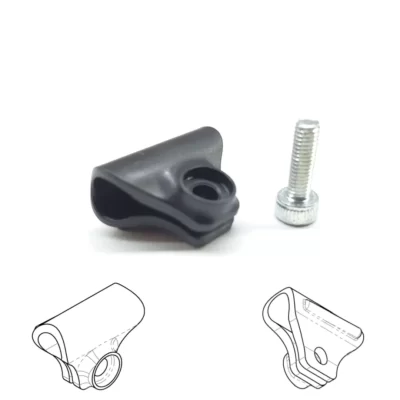
Marzocchi Suspension FULL Seal Support 1998-2018 👀😱💯
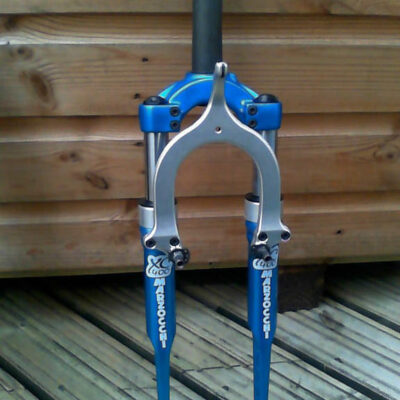
Do you now, that Marzocchi is the ONLY Vintage Suspension Fork Brand which offers FULL SEAL SUPPORT for the older rock solid XC & BOMBER Forks, from the very early StarFork in 1989 up to 2018 !?😱
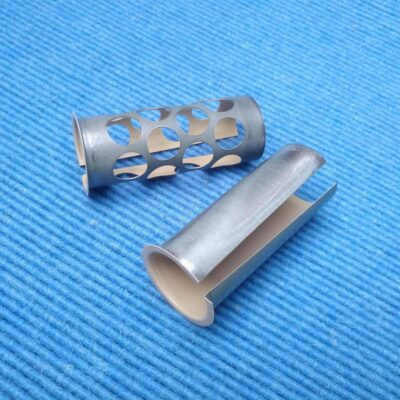
This are sceleted Seals which have been created in the same form and precision as MARZOCCHI did in the glorious days in the past.
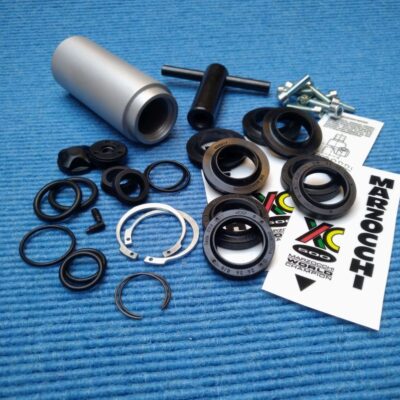
Not speaking about old seal-kits lying in the shelves for years being hard and bricked, but NEW SEALS built with modern production techniques and up-to-date XNBR material.🖐🥇
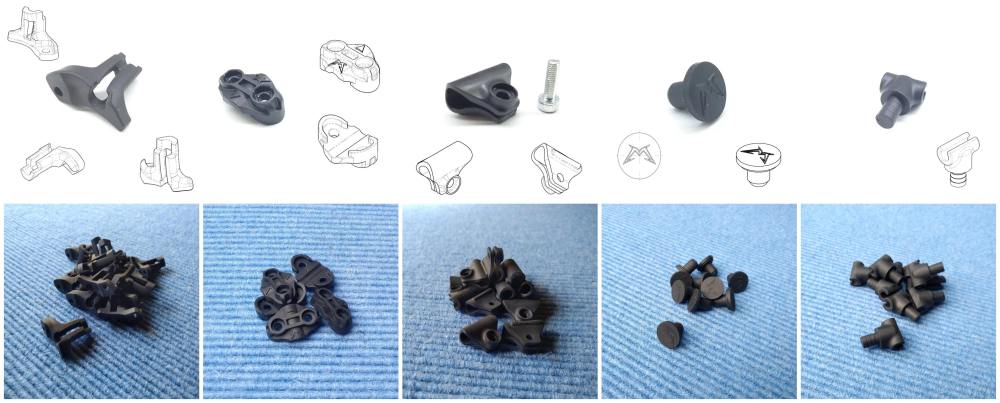
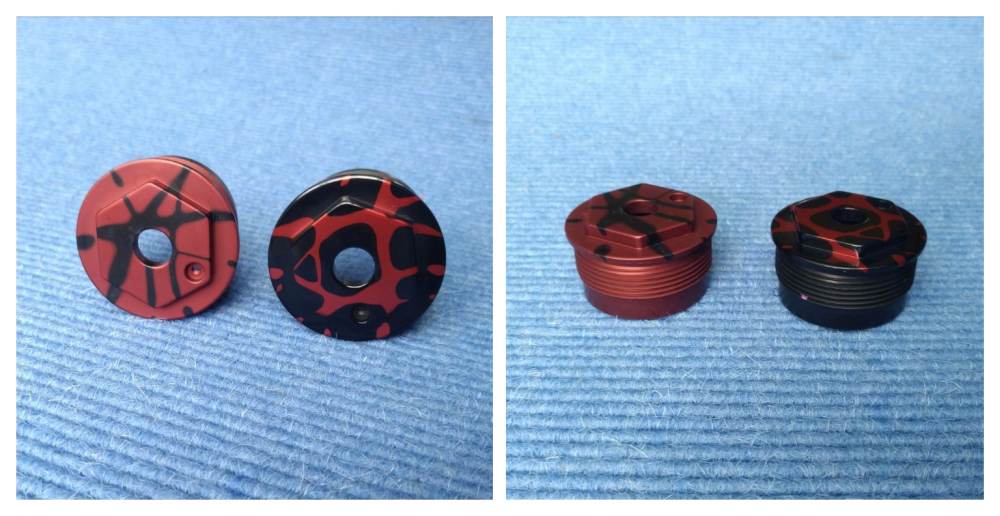
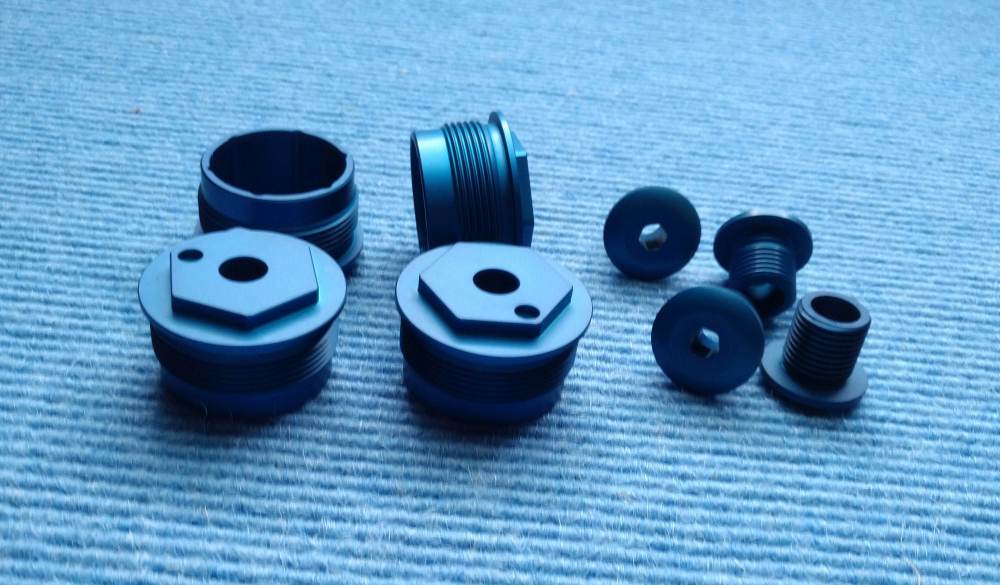
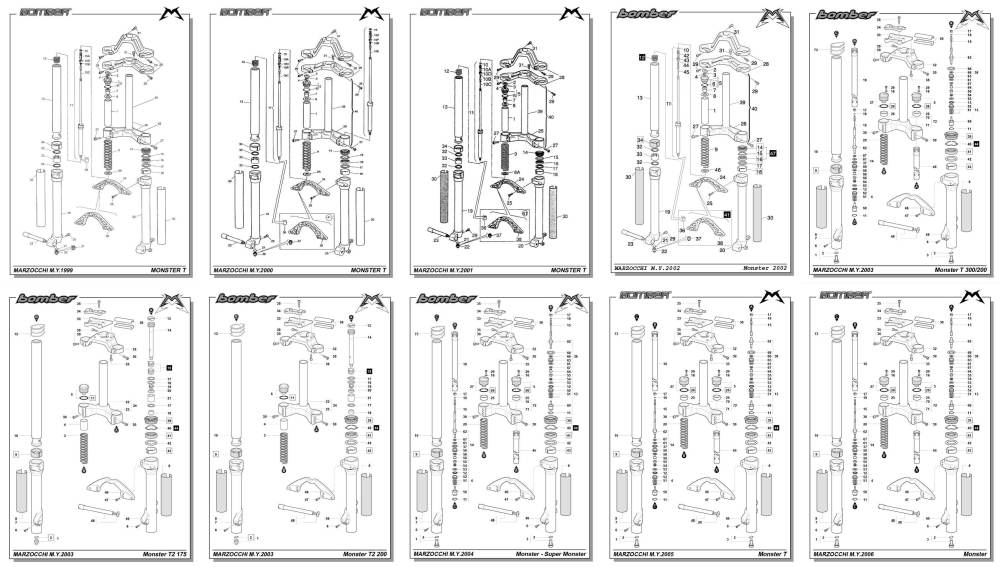
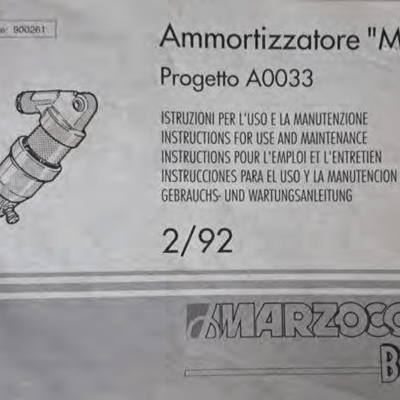
Even more we have collected all Marzocchi DOCUMENTS and are continously building needed SPARE PARTS for our believed Marzocchi Forks.👻
Short : NO !!💯 =▶ Alu 7075 T6 milled Crowns are MUCH stronger‼🚀
Long : I was asked about the strength of the Marzocchi Crowns I already did (all >=1997 : Jr. T Top Crown, Monster Full Flat Top Crown), the ones I had already created 3D models for (Monster’s, Shiver DC, some 888, etc.) and the ones are in progress (some other 888’s + 2. Gen Monster’s).
A comparison of the strength between a 7075-T6 aluminum part and the same part made using the die casting process reveals significant differences in mechanical properties.
Let’s look at the details:
1. 7075-T6 Aluminum (forged or rolled)
Alloy: 7075 is one of the strongest aluminum alloys, commonly used in aerospace applications. In the T6 condition (solution heat-treated and artificially aged), it reaches its highest strength.
Typical strength (T6 condition):
Tensile strength: approx. 570–640 MPa
Yield strength: approx. 480–510 MPa
Hardness: Very high, suitable for applications with high mechanical stresses.
Structure: Parts made from 7075-T6 through forging or rolling have a dense and homogeneous microstructure, leading to very high strength.
2. Aluminum part made using the die casting process
Manufacturing process: Die casting allows for the production of complex shapes and high-volume output. In die casting, molten aluminum is injected into a mold under pressure, which can result in some structural weaknesses.
Alloys: Commonly used die-cast alloys are typically aluminum-silicon alloys like AlSi10Mg or AlSi12, which have lower mechanical
properties compared to 7075.
Typical strength of die-cast parts:
Tensile strength: approx. 250–350 MPa
Yield strength: approx. 150–250 MPa
Defects: Die-cast parts can have internal defects like porosity and shrinkage, which further reduce strength.
Strength comparison:
7075-T6 (forged/rolled): This alloy has much higher strength values compared to a typical die-cast part. The tensile and yield strengths of 7075-T6 are significantly superior because the microstructure is denser and more uniform due to the forging or rolling process.
Die-casted parts: These generally have lower strength due to casting defects and the fact that less high-strength alloys are often used. Even if 7075 were used in die casting, its strength would still be lower due to the inherent defects in the casting process.
There is also a huge difference because of the geometry I have optimized, because:
– the die-casted parts need to have some kind of hollow areas from the bottom, because the process needs to have almost the same wall thickness for the parts to avoid cracks in cooling down.
– the milled fork crowns have been changed + optimized : I filled some of this hollow areas you can see from the bottom which will result in better strengrth overall!💯 (-> picture)
Conclusion:
A 7075-T6 aluminum part (forged or rolled) is significantly stronger than the same part made using the die casting process. The difference in strength is particularly notable because the forging or rolling process produces a much more homogeneous and defect-free microstructure.💯🙏🚀
I like to show you, how Steerers have been developed in the last ~35 years. Marzocchi starting in 1989 made rock solid HQ CroMo steerers in 3 sizes (1″, 1 1/8″, 1 1/4″) for all the XC forks (you know : StarFork, … XC500, XC600 etc.).
And when evolution of suspension forks continued, forks got more weight and users demand was about some weight tuning in steerers.
You know when bullet-proof Bomber’s appeared on the market 1997+ and following Marzocchi developed in weight optimizing modells like BAM, Alloy and others.
Over the year Marzocchi continoued developing different geometries – keep in mind it was a company of developers, not such wtf-buy-it-only-and-don’t-care-get+make_more_money-companies we have today.
The 3D geometry of a steerer needs to handle various level and vectors of forces. In the beginning this have resulted in ‘simple’ straight tubes, the later it became some optimized conical design – btw. same happened with Marzocchi stanchions!
Aluminium 7075 T6 is a fascinating material – heavy used in Aero Industry, Rocket Science and more. It’s high quality variants like ‘T6’ are best choice to repro such steerers.
I’m doing now length up to 280mm, that’s just to save some production costs. The original have been >=300mm.
The marked green one but black is the one which is in production now.👀🖐
FYI : There is one strong Marzocchi CroMO Steerer missing in the picture, I show you somewhen later. It is a variant with another additional inner CroMo core which is pressed into the steerer to avoid dynamic distorsions which results in cracking in all other modern brands, but not for the time Marzocchi rulez the world.
Seen 1st in a Marzocchi 66.🙏🤗.
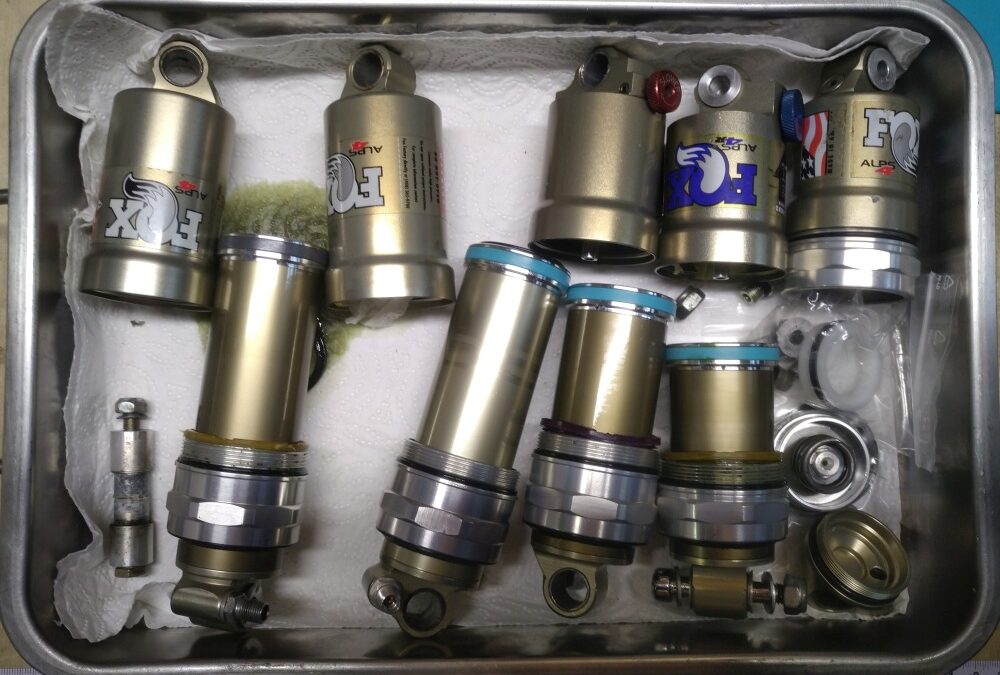
As I have several Fox Alps shocks (check blogs’s title picture) and need a backup shock for my daily Verlicchi/Sintesi Bromont Bike I’m going to do my own very best Spare Parts Kits for Fox Alps Shocks now.🙏🤙
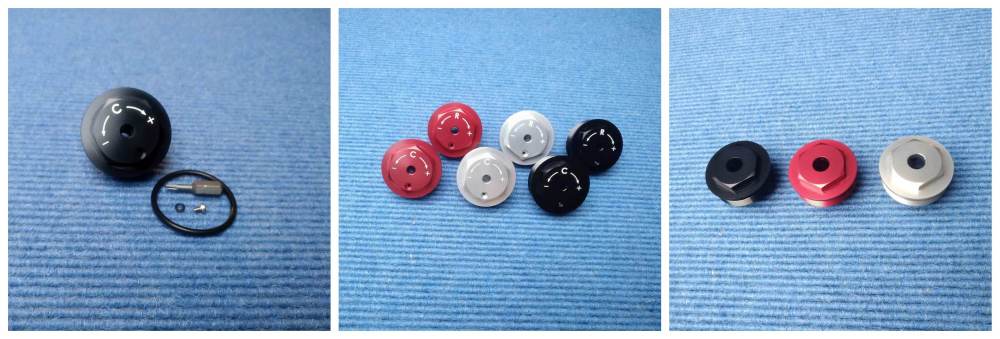
If you read here you know about Fox Alps v4 & v5 and you know the ‘R’ versions have cool adjustable dials. so Foc Alps Shocks have lots of version and details. We need to become specialists now in this – business as usual if you do ‘Retro Parts Reproduction‘⚡🖐🧩👊.
When you scan the market and offers or you ask for a service in detail, this will probably result into the knowledge, that none is doing a correct Full Service because of missing parts!! WTF!!😱😵
Even well known B2B (only) spare supplier like Dämpfer-Klinik only provide some very simple ‘base’ kits including only parts you can find online if you know about the technical & dimensions, but in detail not the money & price worth.
As you probably know lota of this Fox Alp’s have cracked shafts, not sure what the real problem is. This shafts are 38mm diameter.
I think this is the most serious problem, so I started here. But lucky me by thinking about it one can use 38mm stanchions from suspensions forks. This can be very nice solved using Kashima or golden coated stanchions from Marzocchi/Fox from 888’s or 380’s.
All you need to do is to cut it to the correct lengthead an edge and a thread M36x1 on each side. Easy.✨🤣👊
Lucky my I solved this, because a very good friend’s bike shop sold me 12 pcs from their spares boxes. Cost me some $$$, but it is a good start for this project to do replacement shafts very simple on a lathe.🙏⚡
Afaik there have been Fox Alps shafts with different lengths available : some of them I own myself, some data is from Risse website & some other from the net.
Fox Alps 4/5 (R) Shafts lengths (I think this has to be checked later in detail) from what I know :
57,65mm – 2.270″
65,40mm
66,04mm – 2,600″
66,68mm
72,90mm – 2.870″
85,70mm
86,36mm – 3,400″
86,40mm
This are shaft lengths only, I don’t now the corresponding eye-to-eye shaft length in the moment – will also do later.
Yes I know : Risse has done some spare part shafts also, but that are simple ones using cheap black eloxal, shafts are very expensive and getting parcel from Risse will take >1/2 year.
And sure, you can ask Dougal from Shockcraft Suspension from NZ to lathe another stainless steel, from my point this works better than the anodized black ones. The ones from Shockcraft are very special, they do customs hard-chromed hydraulic shafting with CNC threads in each end and a honed centre! WTF. Wouh!👍🙃
Other HARDWARE problems : Screws, Valves, Bushings & rebound-end Spring & Tools.
The Deflating Screw does unfortunataly not have a DIN/Metrix inbus, but it’s ‘zöllig’.
Using such screw formats in Europe results in damaged screw & rounded inbus most of the time. The valve has the same problem, the allen hex key it getting round and afaik it is glued sometimes and will be ’rounded’ by user action 🤔.
So both this parts are easy cheap ones, I like to have that new in the service kit. There is a rebound spring inside the shock (not all Fox Alp’s), which has broken in a lot of cases and the very serious problem about this is : when this happens, it will shredder & destroy your shock from the inside. OMG!😵
And in the end you need a 38mm round Clamp for you wise or a key to be able to handle disassembling and re-assemble the shaft from it’s parts without damaging the parts. On top you need a Tool to strip the bigger dustseal on top over the shaft.
In the end Bushings, Eye-Screws and Kits will make it round. But this depends on the frame’s dimensions and user can buy it himself – so not sure what this will be in the end.
Other missing ‘SOFTWARE‘ – means several Seals & Rings are missing!
Big outer Dust Seal (2 versions 4 vs. 5), the green Teflon Gliding Ring on the inner piston and the important white Rebound Polyurethan Ring!! WTF!!?
As I have best connections in seals of all kind of sorts I will go to replacements 1st to create a fkg good sealkit. Simply the best.👊🖐🤙
You see the problem? You are paying for a full service and all one can do is cleaning a little and do new oil in + take the old parts, but in detail the shock can not be repaired and important parts will not be replaced!??😪😱
Something else missing?
Sure, a technical drawing & most important a parts list. How do you want to communicate if you don’t know parts numbers and it’s names?? wtf!
Sources
There are some cool sources on the net, but such a cool Service Manual like Marzocchi did for older suspensions forks is unfortunately not available. But check this :
YT vids from Risse and other
Gebla
Fox Alps * Animation @ Insta
Known Manuals from Internet
…
We use cookies on our website to give you the most relevant experience by remembering your preferences and repeat visits. By clicking “Accept”, you consent to the use of ALL the cookies.
This website uses cookies to improve your experience while you navigate through the website. Out of these, the cookies that are categorized as necessary are stored on your browser as they are essential for the working of basic functionalities of the website. We also use third-party cookies that help us analyze and understand how you use this website. These cookies will be stored in your browser only with your consent. You also have the option to opt-out of these cookies. But opting out of some of these cookies may affect your browsing experience.
Necessary cookies are absolutely essential for the website to function properly. This category only includes cookies that ensures basic functionalities and security features of the website. These cookies do not store any personal information.
Any cookies that may not be particularly necessary for the website to function and is used specifically to collect user personal data via analytics, ads, other embedded contents are termed as non-necessary cookies. It is mandatory to procure user consent prior to running these cookies on your website.